
ARU and ORU: the difference behind years of dispute
An ARU is the area the municipality defines as needing an integrated rehabilitation strategy - usually historic centres or run-down urban areas. An ORU (Urban Rehabilitation Operation) is the concrete plan that sets out how that rehabilitation will be carried out in that ARU: timelines, incentives, intervention priorities.
Until 2012, the law required the council to approve both instruments at the same time. After that, it became possible to define an ARU without immediately approving the corresponding ORU - which created a grey area: developers and contractors kept applying 6% VAT to works inside ARUs without an approved ORU, on the understanding that location was enough. The Tax Authority disagreed, backed by a Supreme Administrative Court ruling that required an approved ORU - which led to hundreds of inspections and additional VAT assessments for developers who had closed their works years before.
What changed in August 2026
Law no. 48/2026 resolved this through an "authentic interpretation" - a way for Parliament to clarify, with retroactive force, what the law always meant. In practice, it confirms that being inside an ARU is a sufficient condition for 6% VAT, whether or not an approved ORU exists. The effects are formally retroactive to 1 January 2009, but the Order of Certified Accountants warns that overpaid VAT can only be corrected and claimed within the four-year limitation period - in practice, from 2022.
Since August 2026, being located in an ARU is enough - there is no need to wait for an ORU approved by the council.
How to check whether your property is in an ARU
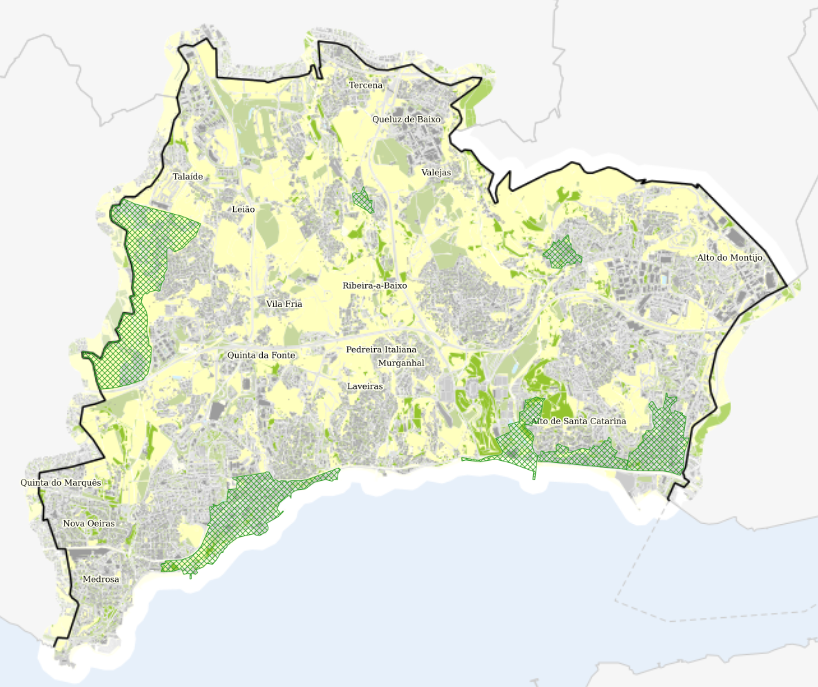
Each city council publishes its own ARU map. In Lisbon, much of the historic city is covered; in Cascais and Oeiras the areas are more specific and it is worth checking case by case. The request is made directly to the council's planning department, through a certificate of location in an ARU, giving the property's exact address.
Where to see your ARU map
- Oeiras - Oeiras Open Data, official map and boundaries
- Lisbon - Portal da Habitação, national index of ARUs
- Cascais - Portal da Habitação, national index of ARUs
- Ericeira (Mafra) - Portal da Habitação, national index of ARUs
For Lisbon, Cascais and Ericeira we refer you to the national portal while we confirm the direct links from each council.
Other benefits besides VAT
Renovation inside an ARU can also give access to:
- IMI exemption for 3 years from completion of the works, renewable for a further 5 years by decision of the municipal assembly - subject to an improvement of at least 2 levels in the state of conservation and to energy-efficiency requirements;
- Reduced municipal fees, such as the assessment of the state of conservation or the occupation of public roads - the percentage varies by municipality;
- A reduced 5% IRS rate on rental income after the renovation, when the owner is an individual, an IRS taxpayer and resident in Portugal.
Transitional regime: projects before October 2023
There is an important detail for developers with older projects. Law no. 56/2023 (Mais Habitação), in force since 7 October 2023, tightened the definition of "urban rehabilitation" for the purposes of this reduced rate - now requiring genuine renovation of the existing building. Before that date, the concept was broader and, under the Legal Regime for Urban Rehabilitation, even included the total demolition and construction from scratch of a new building inside an ARU.
Article 50(9) of Law 56/2023 itself protects those who already had a process under way: it keeps the previous wording of the rule - and therefore the right to 6% VAT even for new construction after demolition - for projects with a licensing application or prior notification submitted before 7 October 2023, or submitted later but under a favourable prior information in force on that date.
For some time, the Tax Authority and the Supreme Administrative Court also required, for these older projects, an approved ORU in addition to location in an ARU. But that requirement applied precisely to the "previous wording" of the rule - the same one that Law no. 48/2026 clarified, with retroactive effect, does not depend on an ORU. In other words: the same August 2026 clarification also applies to these transitional projects - location in an ARU is enough, even if the works are technically new construction after demolition.
In practice: if your process started before that October 2023 cut-off, 6% VAT may apply even if the works are not a renovation of the existing building - and, in light of Law 48/2026, without the need for an approved ORU.
Not to be confused with the new general VAT regime for construction
In July 2026 a separate regime also came into force: 6% VAT on the construction of housing at moderate prices, applicable even outside ARUs, but subject to value caps - sale up to €660,982 or rent up to €2,300/month. This regime does not depend on an ARU or an ORU and has its own rules, explained in 6% VAT on new builds: how the 2026 regime works.
Required documentation
To apply the reduced rate correctly, you need: a project showing that it is a renovation of the existing building (not new construction after total demolition), the certificate of location in an ARU issued by the council, and the contractor's invoice issued with express reference to item 2.23 of List I of the VAT Code - the contractor must be qualified to invoice at the reduced rate.